


Learn why fire ants seem to move across the yard after heavy rain in our video:
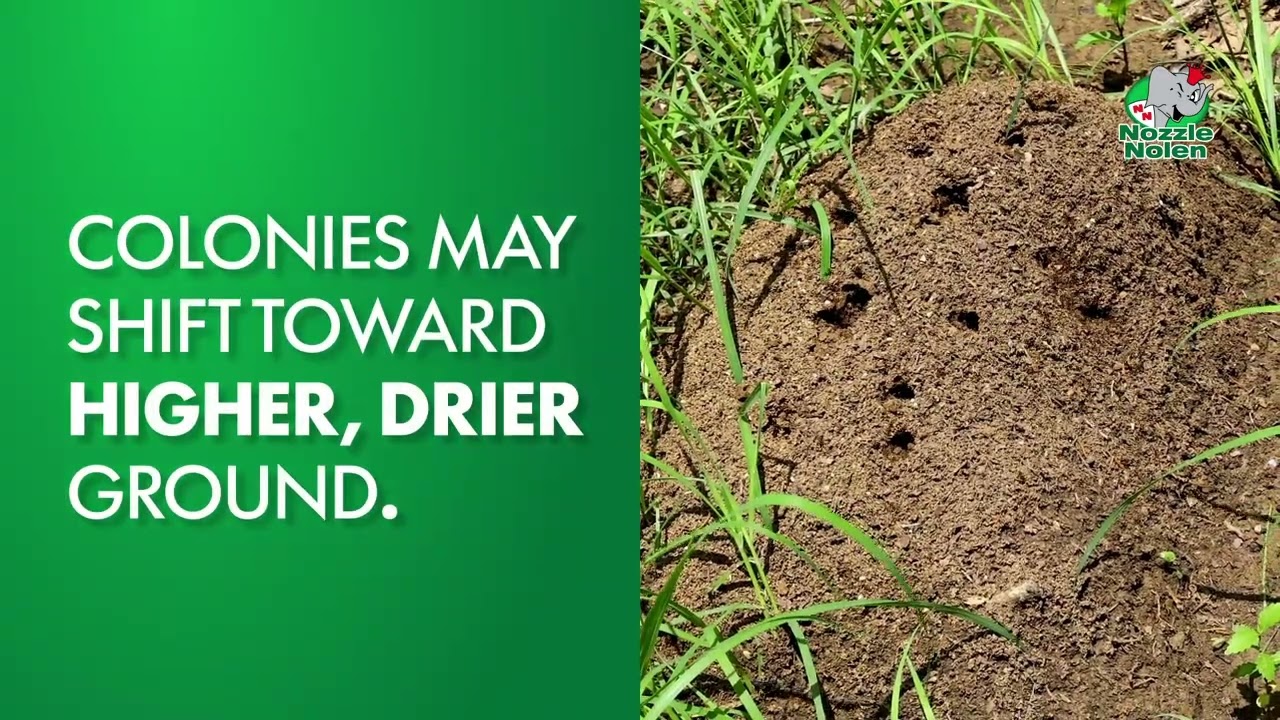
Why Fire Ant Mounds Seem to Pop Up Overnight
It’s a familiar enough scene for many south Florida homeowners: there’s a heavy rain, the yard dries out a little bit, and suddenly it seems like there are fire ant mounds everywhere across the yard. You might assume that new colonies and mounds popped up overnight, but that’s not what’s really happening. In reality, the heavy Florida rains caused changes beneath the surface of the yard, forcing the fire ants to relocate, rebuild or move much closer to the surface. In this blog post, we’ll review why heavy rains can cause fire ant mounds to appear, what it means for your lawn, and how and when to treat fire ant mounds safely.
What Heavy Rain Changes Below the Surface
Fire ant mounds are just the visible “tips” of the colony you can see above the surface. Their colonies extend far and wide underground. But when summer storm season rolls in, the heavy rains it brings can overly saturate the soil, causing tunnels to collapse or simply making the underground colonies too wet. Fire ant colonies have multiple types of “castes” or roles, from workers to queens to their brood (larvae) that all may need to get moved upwards, toward higher and drier ground. This is why after heavy rains, it can suddenly seem like fire ant mounds appear everywhere. What actually happened was that those fire ant colonies were active but hidden below the surface of the yard and now have been displaced toward the surface.
Do Fire Ant Colonies Actually Move After Heavy Rain?
Yes, they can. While the fire ant mounds don’t appear out of nowhere, they can move locations rather quickly when flooding or other weather conditions force them to. Experts at the University of Florida note that if the soil becomes overly saturated, then it can push the fire ant colonies towards:
- Higher, more elevated parts of the yard
- Drier lawn edging
- Curbing, sidewalks and driveways
- Foundations and concrete slabs
- Electrical boxes or utility areas

Can Fire Ants Survive Flooding?
Yes, fire ants can even survive flooding after the destruction of their underground colonies. They’re a resilient group of ant species that have evolved highly adaptive behaviors for survival. In rare cases of extreme and sudden flooding, when the fire ant colony was unable to move itself in time, the worker ants in the colony can connect their legs and mandibles together, forming a living, floating “raft” to keep the colony together! The flood waters can move the floating ant rafts to entirely new locations where they will begin establishing a new colony underground once it dries out a bit. Researchers at the University of Alabama note that fire ant swarming is common a day or two after rain events that were preceded earlier by a drier period.
Why Fire Ant Mounds After Rain Are a Safety Concern
Fire ants have earned their name for a reason. They will aggressively protect their disturbed nests and colonies and they both bite and sting. Rain-softened soil and newly surfaced mounds can easily be stepped on without realizing it. Some of the higher-risk groups you need to watch out for include:
- Children playing outside
- Pets
- Gardeners
- Lawn-care providers and anyone mowing, raking, edging or doing yard-work
Fire ants sting and bite repeatedly, and they can cause an immediate burning sensation which later typically turns into red bumpy patches with white pustules. These are the body’s reaction to the alkaloid filled venom that ants inject when they sting. Fire ant bites and stings are usually just painful and not lethal, but in more extreme cases, they can cause anaphylactic shock, particularly in younger children and older senior citizens. As a homeowner, you don’t need to panic and “quarantine” over every single mound sighting, but you should remain alert and aware of them, especially in places where people or pets walk around.
Should You Treat Fire Ant Mounds When the Ground Is Wet?
If you’re going to treat a fire ant mound, the timing matters. Wet soil or rain in the forecast can definitely reduce the effectiveness of common treatments, as it will wash them away or just lead to runoff. Scientists at the University of Florida explain your available fire ant treatment options, including baits, mound treatments, and timing.
Mound treatments usually come in liquid or powder form and are broadcast directly over the visible mound and the surrounding area. These may not fully penetrate the entire colony, particularly where the queen and larvae are found, however. Bait treatments can be applied more broadly across a yard area and infected workers who forage may bring the bait deeper into the colony. These too are not guaranteed to affect the queen or full colony either.
If you are going to attempt DIY fire ant treatments, to maximize their effectiveness, don’t attempt them randomly after a downpour or before another heavy rain. Check the weather forecast and aim for a day where it’s been suitably dry for a day or two already with no imminent rain in the forecast for the next day or two. This will ensure that whatever treatment you use isn’t washed away or diluted down.
How to Reduce Fire Ant Risk Around Your Yard
Here’s some helpful tips and reminders for Florida homeowners to reduce the overall risk of fire ants in and around your yard:
- Walk the area of the yard after a heavy rain, once it’s dry enough
- Spot and mark mound locations, particularly before mowing
- Keep children, the elderly, and pets away from fresh mound locations
- Avoid disturbing mounds with mowers, rakes, shovels, and edge trimmers
- Watch areas near your patio, edging, driveways, garage slabs, and electrical boxes
- Don’t assume one mound represents the entire colony
More importantly, take care of your lawn and try to maintain a healthy lawn environment. Healthy lawns naturally slow down water absorption and are able to handle higher levels of rain volume, reducing the likelihood of flooding and disturbed colonies below the surface. Healthy lawns also contain other insects and ant species that can compete with and provide checks and balances to aggressive fire ant colonies. Finally, healthy lawns make it much easier to spot fire ant and other pest issues to begin with.
When To Call a Professional For Fire Ant Control
Of course, even the most diligent lawn-care isn’t a failsafe against fire ant mounds, particularly after heavy rain events and localized flooding. As mentioned earlier, they’re a stubbornly hardy and adaptive species of insect. Here’s some signs you may want to call in a local pest control professional:
- You’ve already tried some of the common DIY treatments, but they haven’t fully worked
- Fire ant mounds keep appearing regularly after rainy days
- Mounds are appearing near patios, driveways, walkways, play areas, or pet spaces
- Mounds are appearing closer to the home or near electrical boxes
A professional approach to fire ant colonies is going to incorporate Integrated Pest Management (IPM) techniques and will focus on the entire colony and colony behaviors, and not just the visible mounds. Proper identification of the ant species is important for choosing the right treatment strategies and timing.
Here at Nozzle Nolen, we’re experts at ant-identification and colony-focused treatment for southeast Florida homes and yards. If the lawn itself needs to get healthier and stronger, we can help there too. We offer best-in-class lawn care and lawn-pest protection for yards in Palm Beach county and the surrounding areas. If you’re not sure what species of ant mound is in your yard or have already experienced fire ant encounters, you can always visit our website and schedule a free initial inspection and consultation today.