

Ghost Ants: The “Invisible” Florida Summer Guest
One of the annual rites of living in southeast Florida is spotting a familiar pest inside and outside of your home. We’re talking about ghost ants. Every year, when the rainy season begins to combine with increased summer temperatures, these nuisance insects reappear. In this blog post, we’ll discuss why the summer season in particular drives infestations for these ants, why DIY control methods so often fail, and reveal how even such tiny ants can indicate a much bigger problem.
Identifying Ghost Ants
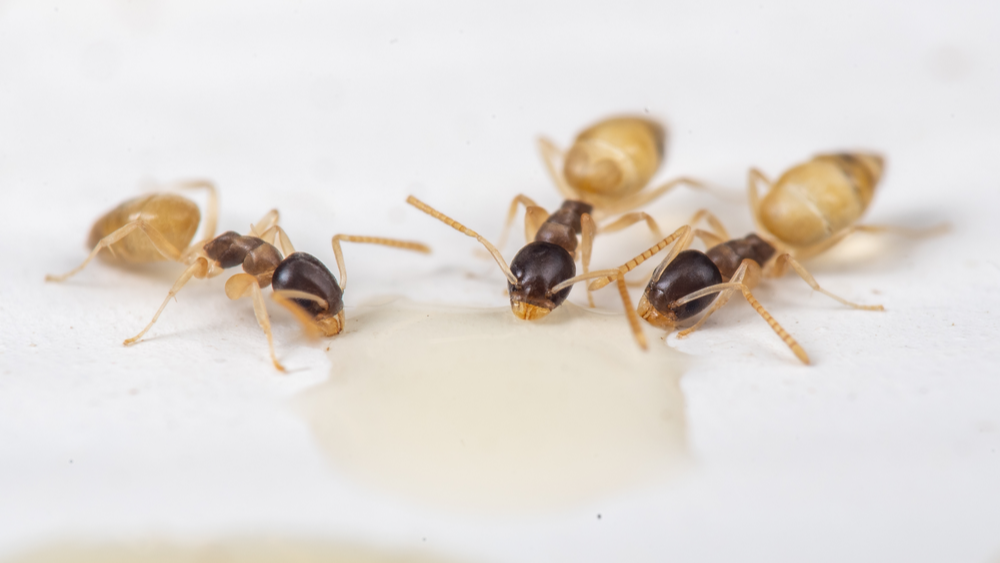
You might be thinking: “why are they called ghost ants?” If you haven’t already figured out where they got their name from, ghost ants are called that because they can be hard to see, particularly against light colored backgrounds (like countertops). These ants are very tiny – about 1.5mm in total size, which is about the thickness of a penny!
In addition to their miniscule size, their abdomens and legs are very pale to translucent in color. Their size and color combine to make them very hard to spot with the naked eye. They are, however, not to be confused with the similarly sized Asian needle ants, which can be hard to distinguish from other ant species. One of the more interesting facts about ghost ants is that they are a polygynous species, which means that they have multiple queens. This species trait has a big impact on why these ants are so hard to get rid of, as we will see later.
Why The Summer Drives Ghost Ant Infestations
The summer season drives increased ghost activity and infestations in south Florida for a few reasons. The first reason is that the increased rain and humidity provide the moisture that these ants need to survive and thrive. These are very adaptable ants, which can create nests and colonies both indoors and outdoors. You’ll often spot them in kitchens, bathrooms, near plumbing lines, or under appliances: warm, moist places they can establish a colony in.
In addition to warmth and moisture, ghost ants are also drawn to food sources. When outdoors, they are often drawn to honeydew that is produced by other insects or birds. Indoors, they are drawn to crumbs and sugar spills, which is why they’re so often spotted in the kitchen. This Better Homes & Gardens article reviews everyday habits that attract ants to the kitchen.
The Problems With DIY Attempts – Why Ghost Ants Keep Coming Back
Despite their tiny size, ghost ants are a big nuisance for many Florida homeowners. Many of them try to tackle the problem themselves, but unfortunately fall short of solving the problem and often make it worse in the long run! A big reason that common DIY approaches like ant sprays fail is that they only address or kill “surface” ants. They don’t impact the underlying colony or its potentially multiple breeding queens. In fact, sprays often cause just enough damage for an existing colony to “bud” into 2 smaller colonies, as a self-defense mechanism.
Over time, however, each colony eventually recovers and returns to full strength, effectively doubling the local ghost ant population. This is why spraying countertops, sinks or floors provides temporary relief, only for the ghost ants to return, often in bigger numbers than before. Actual professional treatments would address the underlying colonies that drive the problems and the indoor conditions that are attracting them. so it’s also not uncommon for them to take up home within the bathroom, kitchen, or even basement areas of the home as well – places with plumbing lines that can leak. Besides moisture, they are also drawn to decaying or rotting wood. Colonies will typically originate outdoors but will look to expand their colony size indoors. The presence of carpenter ants within the home often indicates larger issues..
Ghost Ants vs Other Florida Ants
While no one likes ants in their home, ghost ants are more of a nuisance than a genuine risk. Especially when they are compared to some other Florida ants species. For example, every year carpenter ants cause genuine structural damage to Florida homes, costing millions of dollars across the state. And of course there are the painfully stinging fire ants, which you can learn more about in this short video.
Preventing Ghost Ants
Like many common Florida pests, the best control methods are proactive, rather than reactionary. Some common and easy best practices that will go a long way toward reducing or eliminating ghost ant sighting in your home include:
- Clean counters and tables regularly
- Fix leaky pipes and outdoor hose bibs
- Reduce or remove any standing water in basements or outdoors
- Seal common entry points with small gaps, like door thresholds and window frames
- Trim vegetation and foliage back from the perimeter of your home
- Seal and properly store food supplies indoors
- Seal pet or bird food outdoors
When To Call Professionals
Of course, given their prevalence in the state, even the most diligent homeowner might find themselves still spotting these pesky ants. If proactive measures have failed and homeowners spot the return of ghost ants to the same location or activity spreading from room to room, it might be time to call a local pest control company.
Professional treatments will tackle the problem from multiple angles, including nesting area identification, targeted baiting, controlled direct treatments, colony elimination, and follow-up treatments and inspections. Here at Nozzle Nolen, we offer professional, experienced ant control that south Florida homeowners can trust and rely on. If you’re experiencing a ghost ant infestation this summer, you can always schedule a free pest inspection of your home as well.