


Southeast Florida 2026 Bug & Rodent Trends Report
Last year, we began collecting the topics of every phone call to our Nozzle Nolen locations. In March, we published our first of a new quarterly Pest Tends series that studies specific bug and rodent peak seasons in southeast Florida. We’ll continue to leverage our own phone call and contact form data to create content that provides value and insights for local homeowners and businesses.
This report will review bug and rodent trends in southeast Florida from March 2025 through June 2026. We analyzed nearly 12,000 phone call transcripts from incoming calls to our branch offices from Broward County up to Indian River County. We tallied the various bugs, rodents, and other critters that we get calls about every day and ranked them in total call volume activity, and compared the June 2026 totals vs the March 2026 totals.
Summer & Fall Bug and Rodent Trends Results:
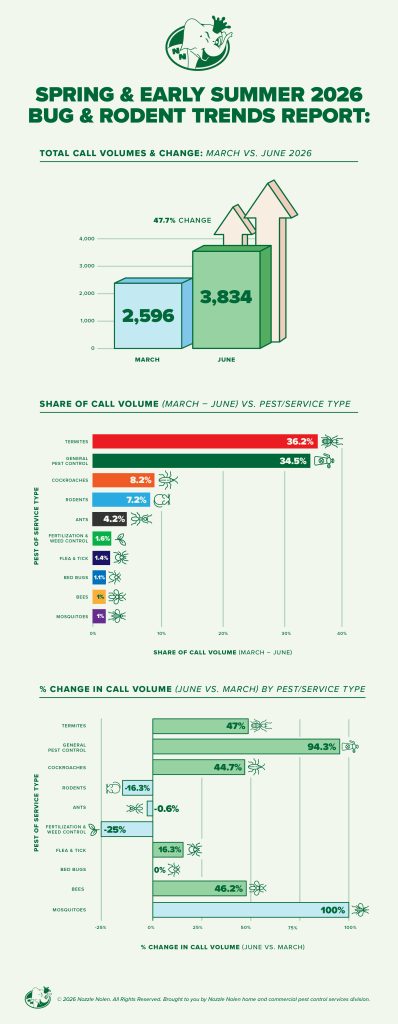
Overall call volume increased from March to June by nearly 48%! However, the growth wasn’t uniform and some pests (or other service types) saw more call growth than others, some stayed flat, and some actually saw declines. Let’s take a deeper look.
- As you can see from the first chart, the very top driver of phone calls in the last 90 days was Termites, accounting for 36% of all calls. Termite call volume has grown dramatically, with a 47% increase in June compared to March. A large chunk of the total call growth is coming from termites.
- General Pest Control calls, which either mentioned multiple pests or just “pest control” generally, was the 2nd highest reason for calls, at 35%. This type of pest/service also saw tremendous growth in the last 90 days, with 94% more calls in June than March.
- Cockroaches came in 3rd for total call volume, with just over 8% of the calls. Cockroach calls in June were nearly 45% higher than they were in March.
- Rodents were 4th in total call volume, accounting for 7% of total call volume. Rodent call activity dropped off in the last 90 days, however. There were actually 16% less calls in June for Rodents then there were in March.
- Ants were the 5th most called about pest type, driving 4% of the total call volume. The call volume over time was effectively flat, with a less than 1% drop in calls in June compared to March.
- Fertilization & Weed Control was the 6th most common concern among callers, accounting for just over 1.6% of total calls. This type of service saw a decline in call volume over the last 90 days, however, with 25% fewer calls in June compared to March.
- Flea & Tick calls were the 7th highest source of call volume, with 1.4% of calls. This pest type saw modest growth in call volume, with just over 16% more calls in June compared to March.
- Bed Bugs were the 8th most common reason for calls, accounting for 1.1% of calls over the last 90 days. The call volume stayed flat, with 0% change in call volume in June compared to March.
- Bees drove the 9th most calls over the last 90 days, with 1% of total call volume. The call volume increased quite a bit, however, with a 46% increase in calls during June compared to March.
- Finally, Mosquitos saw the 10th most calls, with 1% of the total call volume. However, Mosquitos also had the highest growth over the last 90 days with 100% more calls in June compared to March, reflecting the shift to Florida’s rainy season, when standing water, humidity, and frequent storms can create ideal mosquito breeding conditions.
Main Takeaways and Recommendations:
Spring and Early Summer Saw a Major Jump in Pest Pressure
Overall call volume increased by nearly 48% from March to June, showing how quickly pest activity can ramp up in southeast Florida over a few months. That increase wasn’t spread uniformly across every pest or service type, but the pattern is clear: warmer weather, increased humidity, and the very beginning of the storm season all contribute to higher pest activity around southeast Florida homes and businesses
Nozzle Nolen Tip:
Don’t wait until summer is fully underway to get serious about pest prevention. Late spring is the time to inspect your home’s entry points like doors, windows, rooflines and gutters, as well as the lawn and outdoor storage areas. Pests respond rapidly to changes in weather, so homeowners should start early with prevention, exclusion, and routine inspections.
Termites Remain the Top Concern for Southeast Florida Homeowners
Termites were once again the leading reason for calls, accounting for 36% of all calls during the reporting period. Termite call volume also increased 47% in June compared to March, making termites one of the biggest contributors to overall call growth. This fits the seasonal reality in Florida: termite activity is year-round, but swarm season and early summer conditions make homeowners more likely to notice visible signs of activity.
Nozzle Nolen Tip:
Treat termite protection as a year-round priority, not a seasonal issue. If you see swarmers, discarded wings, mud tubes, or hollow-sounding wood near windows, doors, baseboards, or attic areas, schedule an inspection quickly. Termites can cause major home damage long before they become obvious.
General Pest Control Growth Suggests Homeowners Are Often Seeing Multiple Pest Problems at Once
General pest control calls made up 35% of total call volume and saw the highest percentage growth, with a whopping 94% more calls in June than in March. That reflects a broad seasonal shift: as summer conditions build, homeowners may start to see multiple pest issues at the same time. This includes roaches after rain, ants near kitchens and bathrooms, spiders in garages, or general activity around patios and entry points.
Nozzle Nolen Tip:
If you’re seeing more than one pest, look for common attractants near the home: moisture, food, shelter, clutter, and easy entry points. Fix any visible leaks, remove standing water, tidy up any yard debris and trim vegetation away from the roofline and home. In addition, secure any pet food, birdseed, and trash that may be stored outside the home. A property-wide approach is more effective than treating each pest sighting as a separate problem.
Cockroaches Are Rising With the Rainy Season
Cockroaches were the third most common pest concern, accounting for just over 8% of total calls, and roach call volume was nearly 45% higher in June than in March. That increase makes sense for early summer in southeast Florida. Heavy rains can flood outdoor roach harborages, while humidity and moisture makes garages, bathrooms, kitchens, drains, and utility areas more attractive to them.
Nozzle Nolen Tip:
Before and after summer rainstorms, check common entry points for roaches: worn door sweeps and garage seals, cracks around the foundation, gaps in plumbing and AC lines, and exterior vents. Reduce the levels of mulch buildup near the home, fix visible leaks, and avoid letting yard debris, or trash accumulate in your yard.
Mosquitos Activity Also Tracks With Storm Season
Mosquitos ranked 10th overall in total call volume, but they saw the largest growth of any pest or service type in the report, with calls doubling in June compared to March. As southeast Florida moves deeper into summer, increased rainfall, standing water, and higher humidity can quickly turn small water sources into mosquito breeding sites.
Nozzle Nolen Tip:
Don’t wait until mosquitos become nuisances to start active prevention. After summer storms or heavy rains, walk around your yard and empty anything holding water: buckets, plant saucers, toys, birdbaths, clogged gutters, tarps, and pool covers. Even the smallest amounts of standing water can become an active mosquito breeding site. If mosquito activity keeps building, professional mosquito control can help reduce pressure and make your outdoor spaces more comfortable this summer.
Rodent Calls Dropped, But Rodent Prevention Shouldn’t
Rodents were still the fourth largest call category at 7% of total call volume, but call activity declined by 16% from March to June. That drop suggests rodent pressure eased compared to cooler months, but it doesn’t mean rats and mice disappear entirely during the summer. In southeast Florida, roof rats can remain active around palms, fruit trees, rooflines, and attics throughout the year.
Nozzle Nolen Tip:
Use the summer lull as a prevention period. Trim back tree branches and palms away from the roofline and pick up any fallen fruit in the yard. Secure your trash bins and store pet food indoors if needed. Periodically inspect soffits, vents, rooflines, and garage gaps for possible rodent entry points The best time to stop rodents is before you hear scratching in the attic
Prevention Still Beats Reaction — Especially Heading Into Peak Summer
This report shows classic southeast Florida pest patterns. Pest pressures can rise rapidly as spring turns into summer, but the specific pests that are causing the most concern can shift from month to month. Termites and general pest concerns dominated overall call volume, while cockroaches and bees surged sharply in June. A big takeaway is that pest control isn’t just about reacting to what you see today. It’s also about preparing for what is likely to come next in the following weeks and months.
Nozzle Nolen Tip:
Think of pest control like any other kind of home maintenance. Before peak summer rains and storm activity, make it a habit to regularly inspect your home, reduce moisture, and clean up debris. Contact Nozzle Nolen for reliable home and commercial pest control plans if you’re seeing repeated activity that you cannot control. A prevention-first plan helps protect your home and yard and provides peace of mind throughout the year.