

Tiny Ants Can Become Bigger Problems in Florida Homes
It’s a common experience in Florida: when the temperature begins to drop, ghost ants (also commonly called “sugar ants”) are pushed indoors. Homeowners typically first see them in kitchens or bathrooms, usually because of sweets, other food sources, or moisture. While these ants are in no way dangerous to humans or pets, they can be quite frustrating in their persistence. But don’t worry, because in this blog post, we’ll explain what ghost ants are, how they behave, the pros and cons of DIY sprays, and some actionable tips for preventing infestations.
What Are Tawny Crazy Ants and Why Are They So Hard to Control?
Tawny crazy ants are a species of ants that are originally native to South America. In recent years they have begun appearing in warmer southern states, including Florida. They get their name from their reddish-brown color (tawny) and their erratic movements (crazy).
They’re a small to medium sized type of ant that lives in large, interconnected colonies with multiple queens. They don’t create large dirt mounds or dig extensively underground like many other ant species do. Rather, they tend to create colonies by nesting in shallow dirt, underneath mulch piles, or along walls or even within electrical equipment. Because there are multiple colonies with multiple queens, they are very difficult to fully eradicate. Incomplete attempts at removal almost inevitably result in rebounded populations. These ants don’t bite like fire ants do, but they have a similar level of invasiveness and can quickly overwhelm structures, including homes and businesses.
What Are Ghost Ants (AKA Sugar Ants)?
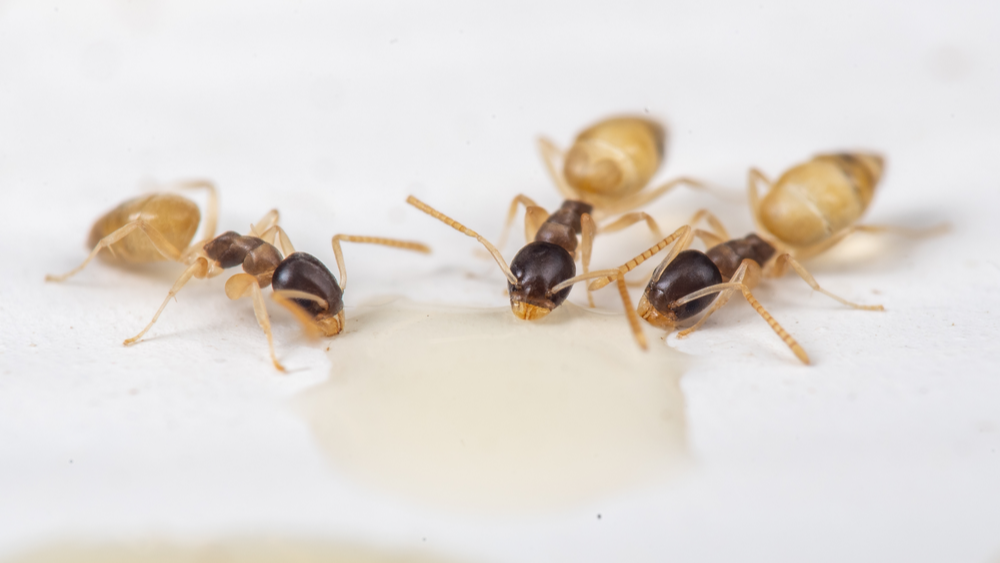
Ghost sugar ants are tiny in size, with a pale to almost translucent body and a darker colored head. Ghost ants are technically their common species name, but many also use the name sugar ants because of one of their favorite attractants: sweet foods. According to the University of Florida, this ant species is “mostly found from Sarasota to Orlando and south, although it does occur as far north as Gainesville in Alachua County”. However, researchers also note that this is a “common household pest found worldwide”, including across the globe as far away as Korea!
Why Ghost Ants Are So Hard To Get Rid Of
One of the most critical reasons that these ants are so difficult to properly eradicate is because their colonies often have multiple queens. Multiple queens within a colony first and foremost allow for very rapid reproduction. What seemingly starts out as a few ants can quickly multiply into much larger issues. Additionally, insects with multiple queens can exhibit a behavior known as “budding”. With budding, new nests are formed outside the original colony, particularly after the original nesting area was disturbed or a sizable enough population of the ants have been killed. This is an adaptive behavior, and homeowners who kill a few visible ants may actually make the infestations worse in the long run. Ghost ant nests are commonly found in or around:
- Walls,
- Cabinets
- Sinks,
- Plumbing lines,
- In outdoor brush or vegetation
Once the original colony buds, the overall impacted area only grows in size. As such, these are particularly hardy ants and can be quite difficult to permanently remove from the home.
Why Sprays Alone Usually Fail or Disappoint
Many homeowners who research how to get rid of ghost ants might settle on a DIY ant spray. While aerosol sprays are somewhat effective in killing these ants directly on contact, they almost always fail to reach the nest(s) and their queen(s). Due to the budding behavior just described, this can actually make the problem even worse, scattering an original colony into multiple nests that cover a wider area. This is why many south Florida homeowners will often feel like the ants just keep coming back after spraying. They kill the immediately visible ants and then experience false relief for a few days at most. Inevitably, the ghost ants return, and often in even greater numbers. What they should do, however, is pivot and transition to smarter control methods. Here’s a few helpful tips for dealing with these common Florida ants.
Tip #1: Remove The Most Common Attractants
As mentioned earlier, ghost ants are commonly called sugar ants because they’re consistently drawn to food sources, and sugary ones are among their favorites. They’re most often drawn to things like:
- Sugary spills from soda or juice
- Food crumbs,
- Pet food bowls
- Sticky residues from candy and fruit.
However, don’t let the name fool you. These ants might prefer sugar, but they are also quite opportunistic feeders and research shows they can exploit a very wide range of food sources. In addition to these food sources, ghost ants also need and are attracted to reliable sources of moisture. While food sources are commonly left on visible countertops or floors, the most common moisture attractants for these pests are sinks and drains, which can be harder to spot.
The best practices here are actually pretty basic and straightforward, but must be exercised consistently:
- Wipe down countertops and sweep floors daily or nightly within the home.
- Seal and store food properly and take the trash out regularly.
- Tighten up dripping faucets and leaky drains.
Those simple steps will go a long way towards controlling the attractants that the pests are actively seeking. With little to no attractants in the home, the ants will migrate elsewhere to find them.
Tip #2: Seal and Exclude Ants from Getting In
While dealing with attractants is a “must-do” for dealing with ghost ants, it’s also important to identify and address how they get inside the home to begin with. This means inspecting the most likely infiltration points: general gaps and cracks in the exterior, around entryways like doorways or windows, along plumbing lines, or along baseboards. Make it a habit to perform routine inspections around the perimeter of the home looking for gaps or cracks and other opportunity points. Seal them up as needed.
In addition, be mindful of any vegetation that grows in close proximity to the home. These often serve as “bridges” for the ants, as they move from the outdoors to the indoors. Some basic recommendations include:
- Prune and trim vegetation like bushes or tree branches that are within 5-10 feet of the home. Trim at least once or twice a year, if not more regularly.
- Remove or set back any brush or compost piles from the home at least 15- 20 feet
- Clean up fallen leaves and other debris that can collect in your yard.
- Drain or remove any standing pools of water.
Finally, deal with any moisture issues that can attract ants indoors. Check for leaky pipes, drains and faucets, toilets, and any appliances with water lines, such as washing machines or dishwashers. In south Florida, humidity is a recurring issue, so address excessive humidity within the home as needed with a dehumidifier or a more centralized heating and cooling system.
While diligent exclusion methods will greatly reduce the overall levels of pest pressure, they are not entirely foolproof. Exclusion works best when combined with other approaches and tactics as part of a preventative strategy.
Tip #3: Baits Are More Effective Than Sprays (When Used Properly)
If you are going to attempt a do-it-yourself (DIY) method for combatting ghost ants, food based baits are probably going to be more effective than sprays. As mentioned earlier, sprays will only kill visible ants upon direct surface contact. These sprays kill the ants where they are, but don’t have any impacts on the overall colony and the majority of the ants that you can’t see.
Baits, however, will result in forager ants taking back the poisoned food source to the nest, where it can kill a much larger quantity of ants, including potentially the queen. The key with baits is persistence. Unlike the overall ineffective sprays, which provide immediate but false relief, with baits you might not feel as if anything is happening after the first day or two. Stick with it. Baiting can take time, but in the long-term, it’s the far more effective DIY approach for getting rid of sugar ants.
Manage the temptation to mix spraying and bait attempts at the same time. While this might seem to combine short and long term approaches, spraying at the same time you are trying to use baits can actually reduce the bait effectiveness. Be patient, and the baiting approach will yield better results than sprays. Our video from a few years ago still offers great information on this topic.
When DIY Isn’t Enough: Why Professional Ant Control Can Help
No matter how patient or persistent a homeowner might be, however, they still might find full relief from the pressures of ghost ants. This is why a professional pest control solution might be a homeowner’s best bet, saving them a lot of time and headache. A pest like ghost ants will typically require a more strategic bait station rotation, ongoing monitoring, and follow-up visits. A trained pest control technician will be able to identify nesting zones and travel paths both indoors and outdoors, treating the problem holistically. For insects with multiple queens, like the ghost ant, this is critical.
Here at Nozzle Nolen, we have decades of experience offering professional residential ant control for ghost ants and sugar ants. As Florida has experienced climate and land development shifts in that time, we know firsthand how troublesome and persistent these pests can be. Our technicians are intimately familiar with the local behaviors and seasonal pressures of ghost ants. As part of our overall residential pest control programs, we offer professional ant removal services throughout the Southeast Florida service region.
If you see or suspect you have a sugar ant infestation, you can contact us directly here at Nozzle Nolen to schedule a free initial inspection and consultation. Remember, it’s always better to act early in a preventative manner than to have to reactively deal with ghost ants later.