

Bees and wasps can become a safety concern when they build nests near doors, patios, rooflines, attics, wall voids, landscaping, or other areas where people and pets spend time. Nozzle Nolen provides professional bee and wasp control throughout Southeast Florida, beginning with identification of the stinging insect and the location of active nests or nesting areas.
Because different species behave and nest differently, accurate identification matters. Our trained technicians inspect the property, determine the appropriate control approach, treat active bee or wasp activity when appropriate, and recommend steps that can help reduce repeat nesting.
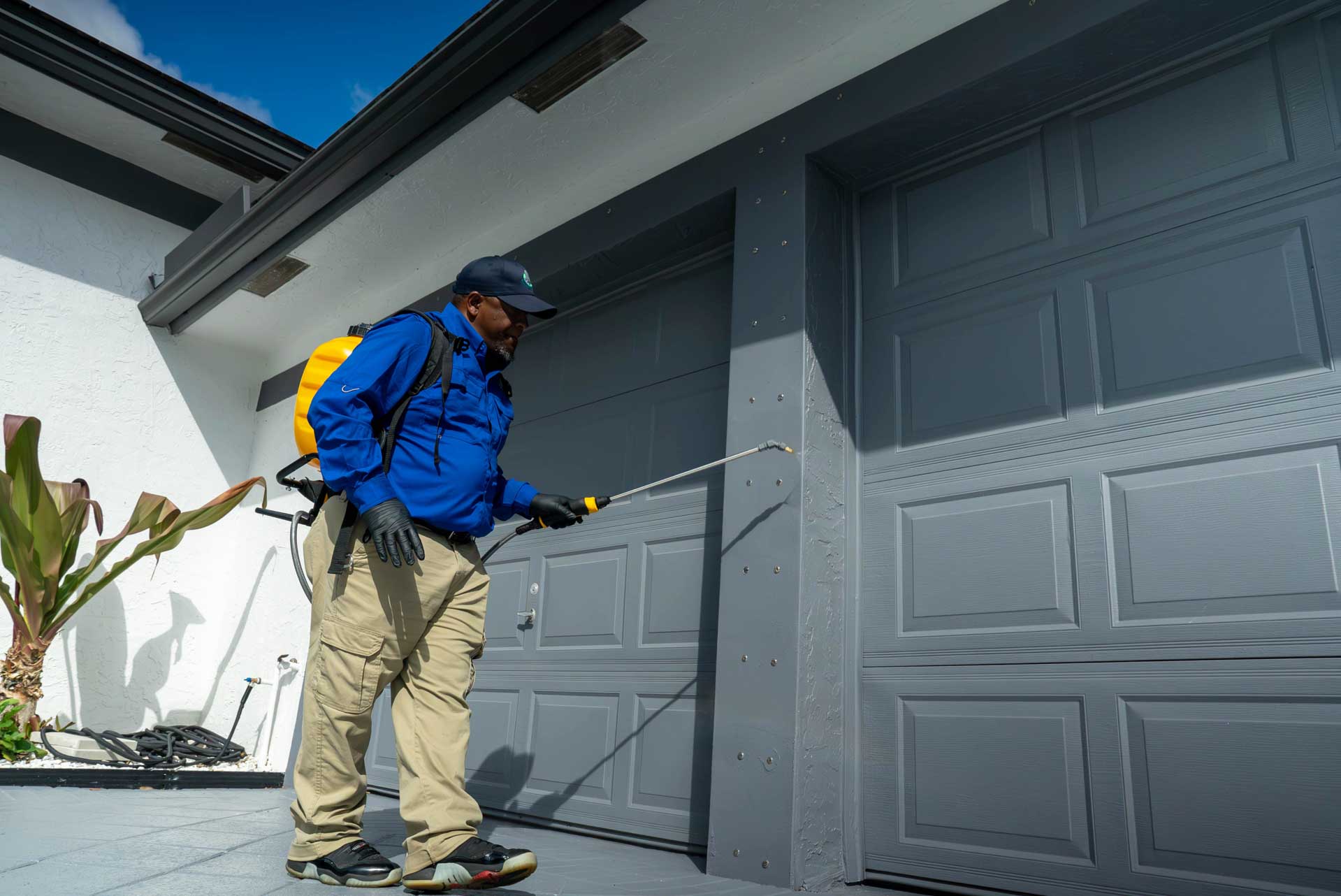
How Our Bee and Wasp Control Service Works
- Inspection and Identification: We identify the stinging insect and look for nests, entry points, and patterns of activity around the property.
- Targeted Treatment: Based on the species and nest location, we recommend a treatment approach designed to address the active problem while minimizing disruption around your home.
- Nest and Entry-Point Guidance: When nests or nesting materials can be safely addressed, our team explains the next steps and identifies openings or conditions that may encourage future activity.
- Prevention and Monitoring: Sealing gaps, repairing screens, and reducing attractants can help discourage new nesting. If activity returns, contact us for follow-up recommendations.
Common Bees and Wasps in South Florida
- Honeybees: Social pollinators that may form colonies in wall voids, attics, trees, or other cavities. Avoid disturbing an active colony.
- Africanized Honeybees: They closely resemble other honeybees but can respond more defensively when a colony is disturbed, making professional identification especially important.
- Paper Wasps: Often build exposed, paper-like nests under eaves, soffits, patio structures, and other protected areas.
- Yellowjackets: May nest underground or inside structural voids and can strongly defend an active nest.
- Bald-Faced Hornets: Build enclosed paper nests on trees, shrubs, or structures and can become defensive when the nest is threatened.