


Learn about the most aggressive termite species in Florida in our video:
The Most Destructive Termite Species In Florida (That No One Expects)
Among the various pest pressures that Florida homeowners and commercial businesses face throughout the year, one of the most persistent and destructive are termites. And among the different species of termites active in Florida, one stands out above the rest: the Formosan Subterranean termite. This particular species is considered among the most destructive and aggressive insects in the world.
In southeast Florida, the swarm seasons from April-June are when most homeowners first notice them, but the damage they cause can start well before that. And with recent research from the University of Florida showing that Formosan termites are spreading across the state, their risk to homeowners is higher than ever. If you see these swarmers around your home, they may not just be a nuisance – they could be a warning sign.
What Are Formosan Termites (And Why Are They So Destructive?)
Termite species generally come in two main types: drywood and subterranean termites. While drywood termites nest and feed directly within the wood that homes and other structures are built from, subterranean termites nest underground, traveling above-ground in search for their favorite food source: cellulose (the main component of wood).
Formosan termites are a type of subterranean termite, but they are far more aggressive. They are known for their very large colony sizes – Formosan colonies can number up to 6 or 7 MILLION termites in size. They are also known for their rapid reproductive rates, and their ability to structurally damage homes and businesses; researchers describe Formosan termites to be particularly destructive.
Swarm Season: When Formosan Termites Are Most Visible
The time of the year when Formosan termites are the most visible in south Florida is during the annual “swarm season”, which runs generally from April through June. This is when the reproductive caste of Formosan termites, called alates (aka “swarmers”) swarm in large numbers and look to reproduce. This is when colonies can grow in size or even when new colonies emerge. The characteristic swarms from these termites are often at night, near outdoor lighting, or after particularly warm and humid weather. Florida homeowners will notice these winged termites collected in large numbers on outside walls and may also notice discarded wings near walls, doors, and windows. Swarming behaviors don’t mean that a termite problem is just starting – it more often than not signals that a very mature colony is nearby, one that may already be causing damage to nearby homes and other structures.
Why Formosan Termites Are Worse Than Others
There are few important reasons that Formosan termites are considered more destructive and aggressive than other termites.
- Colony size – As mentioned earlier, the sheer size of a Formosan termite colony is a top reason it poses more risk as a species. With colonies that are up several million termites in size, once they get settled in an area, they are a force to be reckoned with.
- Aggressiveness – Formosan termites are quite active foragers and can cover large distances in search of food sources: anywhere from the length of a football field to nearly a quarter-mile in distance.
- Destructive speed – Whereas other termites species might take years to cause significant enough structural damage to a home or business, a Formosan termite colony can cause the same destruction in a matter of months.
- Nesting adaptability – Formosan termites prefer to nest and live underground, where the soil is adequately moist. However, they can build “carton nests”, which allow them to thrive and re-habitat above ground in custom built structures.
Because of their unique characteristics compared to other termite species, Florida officials warn about the risks posed by subterranean termites, including Formosan ones. Florida is already known as the most termite infested state in the country, and experts say the problem is only going to get worse in the coming years.
What Do Formosan Termite Swarmers Look Like?
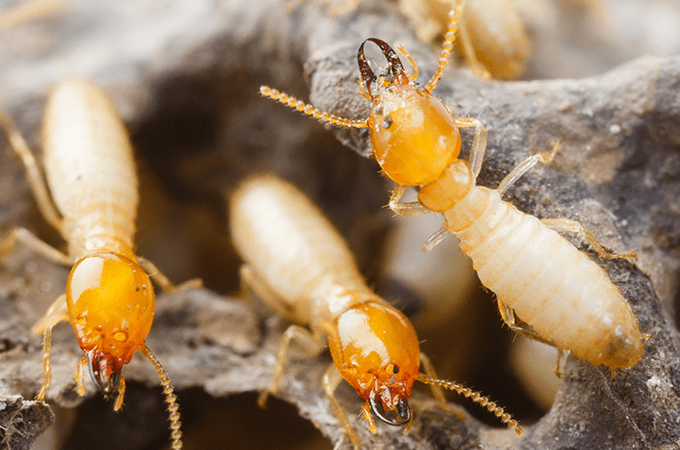
The swarmer (alate) caste of Formosan termites have a distinct appearance. A few key visual indicators include:
- Winged bodies
- Yellowish-brown to beige coloring
- Translucent wings
- Attracted to light, warmth and moisture
Winged termite alates are often mistaken for flying ants, in addition to other termite species. Here is a helpful blog post we wrote to better tell subterranean vs drywood termites apart, as well a short video version.
Why Early Detection Matters More With Formosan Termites
Because of their colony size and their destructive speed, structural damage to homes and businesses caused by Formosan termites escalates rapidly. And as indicated earlier, by the time swarming season occurs, it means a mature colony is already nearby. Infestations might remain hidden behind walls, inside attics or within the structural wood elements of the home.
Because of this unique combination of attributes, early detection of Formosan termites is even more critical compared to other active termite species in the area. For this reason ongoing research continues to track subterranean termite activity in south Florida and across the state. This long-form video provides a very comprehensive and in-depth overview of the spread and impact of subterranean termites in Florida, and why early detection and management are so critical.
Why DIY Treatments Fall Short
DIY treatments like store-bought sprays almost always fall short for a few key reasons. To start, sprays or bait traps only target and kill visible termites, and do nothing to impact the nest or the overall colony. In some cases, it just causes “budding”, when one colony splits into two (or more). The swarmers are also just one caste of termite and are not even the ones that eat the wood (the “worker” caste does that). So, spraying a swarm of alates is not going to do much to address the core problem.
Formosan termites require a more specialized approach, which includes long term control strategies, monitoring systems and customized treatments. Incorrect treatment plans provide false security and peace of mind that allow colonies to continue and grow.
Professional Formosan Termite Control: What Actually Works
The most effective control programs for Formosan termites will actively target the entire colony – not just swarmers or visible above-ground termites. They typically are multi-pronged approaches that combine:
- Through inspections above (and below!) ground
- Baiting systems
- Targeted, direct soil treatments
- Monitoring
- Follow-up treatments and coordination
If you have seen swarmers outside your home or business, or in the neighborhood, this is a sign of an active nest and colony nearby. Acting early can make a world of difference in mitigating the impact and risk posed by these termites.
Here at Nozzle Nolen, we have decades of experience with the insects and pests native to south Florida. We offer termite control options for residential homeowners throughout the area. Visit our website to schedule a free initial termite inspection of your home and property.