


There Is No Off-Season for Termites
When many homeowners think of termites, particularly in southeast Florida, they might associate them with spring swarms. While these swarms are more typically observed in the spring time, these are just reproductive events, and don’t represent the full-spectrum of termite activity. Termites remain active year-round, and the problems they cause are not confined to any season of the year. The warmer temperatures, humidity and land development expansion in Florida all combine to create an environment where termites can feed and expand 12 months a year. In this blog, we’ll cover why termites don’t actually slow-down in the fall and winter, what species are the most common in the area, and provide some helpful tips for homeowners to protect their homes.
What Do Florida Termites Look Like
The appearance of termites varies a little bit by what’s called the “caste” of termite, which we’ll cover more a little bit later. But for now, just know there are 3 different groups of termites, each with their own distinct appearance.
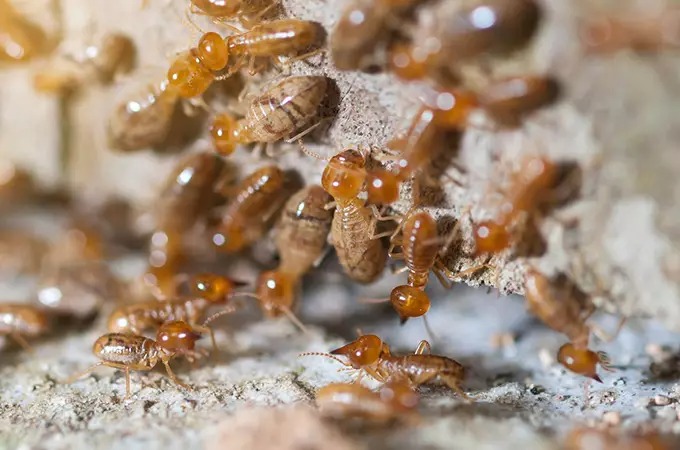
- Workers: Worker termites have pale, soft bodies without wings. The workers are less often seen compared to other castes.
- Soldiers: Soldier termites have similar pale bodies like workers do, but soldiers also have larger, darker heads and visible mandibles (pinchers) that they use for protecting the colony.
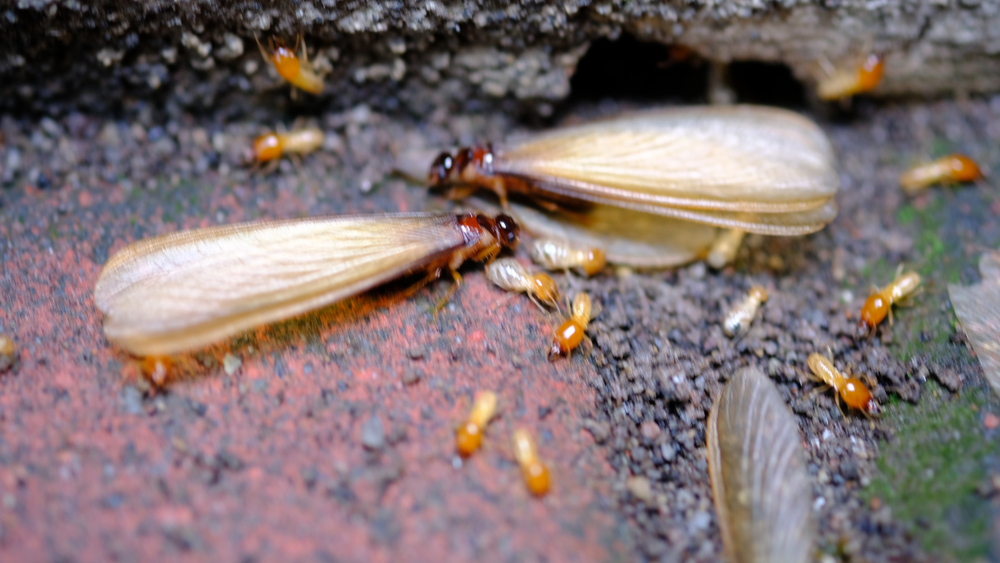
- Swarmers: Swarmer termites are the winged caste, and they’re often confused for flying ants. They have dark, broad bodies, antennae, and two pairs of translucent wings. They are the most visible of the castes, especially during swarming season.
Southeast Florida Is Ideal for Termite Activity
There’s a few different reasons why southeast Florida is a hotbed for termite activity.
- Aside from occasional cold spells, the overall climate does not feature any prolonged periods of freezing temperatures that would effectively slow down the metabolism and lifecycle of termites.
- The frequent rain, proximity to the ocean, and overall humidity all provide termites with the moisture they need to survive and thrive.
- In addition, the area has seen a lot of land development growth in the last 20-30 years, and this has provided termites with ample wood supplies for food sources.
For subterranean termites, even when temperatures do dip down and surface activity seems low, they are still quite active underground. According to University of Florida researchers, termites cause $40 billion in damage globally each year, and 80% of that damage is caused by subterranean termites. For residents of southeast Florida, the potential risk these insects pose remains high throughout the year.
Common Termites in Southeast Florida
While many species of termites are active in our area, three pose the greatest threat to homeowners and are the most likely to require residential termite services in Florida: subterranean, drywood and dampood. The two most common types of termites found in southeast Florida by far are drywood termite and subterranean termites, with a few different species or subtypes within subterranean termites. There are occasionally some dampwood termites that feed on wood that is kept permanently damp, but drywood termites and subterranean termites make up the majority in Florida.
As the name implies, subterranean termites reside and form their colonies underground. Compared to other types of termites, the colonies can be quite large, covering up to an acre or more of ground beneath the surface. Many homes can inadvertently be built right on top of subterranean termite colonies.
As described earlier, termites in these colonies exist in 3 main castes, which describe their overall role or function in the colony:
- Workers: These are the termites that seek out and chew wood, paper, and any other cellulose containing material.
- Soldiers: These termites protect the colony from predators and serve a few other functions
- Swarmers: These termites, also called alates, are the reproductive termite and visibly swarm in the spring (and occasionally fall).
The damage to homes is caused by the workers, who emerge from the soil and seek out sources of cellulose, one of the most abundant materials on the planet. Many species (including humans!) lack the ability to properly digest cellulose, but termites are uniquely evolved to do so. Wood in the form of building lumber presents them ample and steady food sources for the colony.
As covered by Local 10 News, as well as WLRN radio, two of the most common subtypes or species of subterranean termites are also beginning to cross-breed. The Asian subterranean termites and the Formosan subterranean termites are now hybridizing, potentially increasing the risk they pose.
Drywood termites don’t form colonies underground but rather exist within structures. Because they don’t visibly swarm the same way that subterranean termites do, they can actually go undetected within homes or structures for years, often after they’ve already caused tremendous damage.
Signs Of Termites in Your Home
While termite infestations may not actually result in any visible signs in or around your home, when they do there are a few common visual indications. This includes:
- Mud-tubes along foundations or walls – These are the “travel routes” that termites build and use as they move from below-ground into a home or structure. They’re typically found just a few inches or so off the ground.
- Bubbling or blistering paint– These paint bubbles are caused when the cellulose-based building material underneath or behind the paint is steadily chewed away, leaving hollow pockets of space that can bubble or blister out.
- Hollow sounding wood – Termites generally eat lumber structural elements (beams, rafters, etc.) from the inside out. As such, trained technicians can often detect termite activity by how dense or hollow the wood elements sound upon knocking or tapping them.
- Discarded wings – These are often found near entry points into the home, like doors and windows and their frames.
- Frass piles – Frass is the excrement of drywood termites. They are small, dry, and pellet shaped. They are often found on or near wood that’s infested with drywood termites.
Swarm Season vs Genuine Risk Periods
As mentioned earlier, most Florida species of subterranean termites will swarm in the spring season, right after temperatures begin to warm up a bit. Because that’s when the termites are most visible to homeowners, it’s not uncommon for many to assume that’s the riskiest time of year for them. However, it’s important to remember that swarming is a reproductive event that only involves alates. Just because swarming events typically cease during the winter doesn’t mean risks to homes are reduced during the cooler months. Damage to homes can occur well before or long after swarming events. The worker termites feed year-round, and as such, the genuine risk to homeowners is pretty consistent throughout the year.
The Hidden Costs of Termite Damage
Whether drywood or subterranean, termites that have started to feed on lumber and other cellulose based materials within homes or structures can cause slow and steady damage that goes undetected for years. Throughout the country, many homeowner insurance policies will exclude coverage for termite damage, such is the devastation they can wreak. In addition, many states or mortgage lenders require as part of home sales a Wood Destroying Organism (WDO) inspection and report. Unforeseen infestations can delay or negatively affect home sales. When it does come to remediation and repair, the total costs far exceed the costs of preventative measures.
Why Year-Round Inspections Are Important in Southeast Florida
Because the damage from termites can go undetected for months or even years, and because termites feed year-round, it’s important to schedule routine inspections a few times throughout the year, and not just during swarm season. Some of the more important times to inspect include:
- After sustained periods of very heavy rain
- Before buying or selling a home
- Before and after renovations
- Annually to bi-annually as a preventative measure
Luckily, residents of West Palm Beach and the surrounding nearby areas can schedule a termite inspection year-round too!
True Prevention Requires Long-Term Strategies, Not One-Time Treatments
Because of the range of termites’ species, their colony locations, and colony sizes, there is no one size fits all approach for termite treatments and prevention. Termite protection plans might include methods and approaches such as:
- Soil treatments
- Barrier placements
- Baiting stations
- Ongoing monitoring
The reality is that homeowners in Florida will have the best overall protection and greatest peace of mind with ongoing protection plans. One-time treatments only serve as band-aids on what are most likely much bigger problems. While long-term termite protection as part of a complete pest control plan does come with a cost, it is a solid investment and will save homeowners many times over compared to the potential costs of undetected termite infestations.
What Is a Termite Bond in Florida?
A termite bond is a contract or warranty between a homeowner and a company providing termite protection services. IIt typically includes things like ongoing inspections and re-treatments as needed if termites return. In some cases, it might also cover limited repair coverages (depending on the bond type). Termite bonds can cover very specific and shorter windows of time (perhaps leading up to a home sale), or they can be renewed annually. Because most (if not all) homeowners insurance policies exclude termite damage, termite bonds are important for providing homeowners with year-round peace of mind. Remember, termite activity doesn’t stop outside swarming season, so neither should your protection.
Termite Learning Resources and Visual Aids for Florida Homeowners
Here at Nozzle Nolen, we know that many folks these days just as much prefer video content over written articles. That’s why we’ve also developed an entire Termites Video Playlist of helpful videos on our YouTube channel. After you’re done reading this post, you can head on over there to find even more information and tips from our trained and experienced expert technicians.
What Southeast Florida Homeowners Should Do Today
As covered previously, termites can cause damage and go undetected for months or even years. Don’t wait for visible signs of termites or assume a lack of visibility implies lowered risk. Swarm season is NOT the same as infestation periods. Early detection and an overall prevention based approach will best protect your property and provide peace of mind.
If you suspect or even are unsure of potential termite risks, you can schedule a free initial inspection with Nozzle Nolen today, and year-round.